
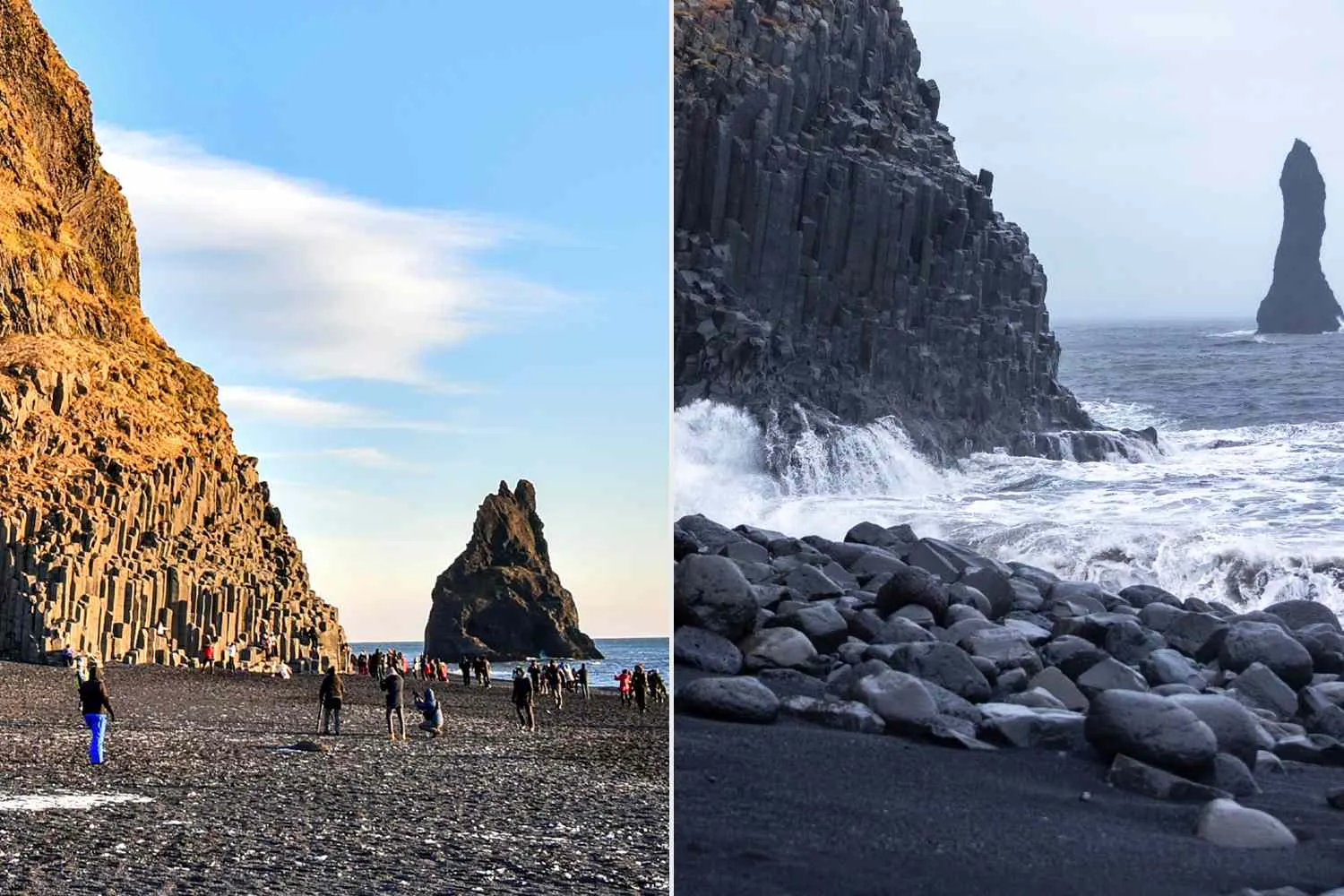
If you’ve recently seen news or viral posts about Iceland’s famous black sand beach, you might be wondering what actually happened to it.
Some reports made it sound like the beach disappeared entirely — but the reality is a bit more complex.
So, what really happened to Iceland’s black sand beach?
What happened to Iceland’s black sand beach?
The famous black sand beach, known as Reynisfjara, has not disappeared, but it has been significantly altered by coastal erosion and strong ocean waves.
In early 2026, powerful storms and unusual wave patterns reshaped parts of the beach and removed large amounts of sand.
Why this happened ?
The changes were caused by a combination of natural factors:
- Persistent strong winds
- High-energy ocean waves
- Rising sea levels and storm activity
- Long-term coastal erosion
These forces moved large amounts of sand and reshaped the coastline over time.
Is the beach still open and safe?
Yes — the beach is still open, but conditions can be more dangerous.
Reynisfjara has always been known for “sneaker waves”, which can suddenly rush inland and pull people into the ocean.
Because of recent changes:
- Space between visitors and waves is smaller
- Some areas may be restricted
- Safety warnings are more important than ever
Why people thought it “disappeared”
Some headlines and social media posts exaggerated the situation, suggesting the beach was gone.
In reality:
- It was reshaped, not destroyed
- Natural changes happen often in Iceland’s landscapes
- The beach may continue to evolve over time
Where Reynisfjara Is and Why It’s Famous ?
Reynisfjara is located near the village of Vík í Mýrdal in southern Iceland and is known for its:
-
Black volcanic sand, created by erosion of basalt rock and volcanic material.
-
Basalt column formations and caves carved by the ocean.
-
Reynisdrangar sea stacks, dramatic rock pillars off the shore.
These features, shaped over thousands of years by volcanic activity and ocean waves, made Reynisfjara one of the most iconic natural attractions in Iceland.
The Dramatic Change in Winter 2026
In early 2026, a series of exceptionally strong storms and persistent easterly winds hit Iceland’s south coast. These unusual weather conditions — lasting for several weeks — caused extensive coastal erosion, rapidly removing large amounts of the characteristic black sand.
Key Changes Reported
-
Much of the black sand has been washed away, leaving other features like basalt columns exposed directly to the sea rather than resting on wide stretches of beach.
-
A large section of the slope beneath Reynisfjall mountain collapsed, blocking walking access and altering the landscape.
-
Walking paths and access points are now much closer to the waterline or gone entirely, forcing authorities and guides to warn about safety risks.
Locals have described these changes as unprecedented in speed and scale, with some noting that it’s the worst landslide they’ve seen at the site.
Why This Is Happening: Erosion and Wind Patterns ?
The main explanations from scientists and coastal engineers focus on natural erosion — especially accelerated by atypical wind and wave patterns this winter:
1. Unusual Easterly Winds
Normally, winds along Iceland’s south coast come from the southwest. These winds carry sand eastward and help replenish beaches like Reynisfjara.
However, this winter saw strong easterly winds, blowing sand westward. Because of nearby geographical features like Reynisfjall mountain, the sand couldn’t return to the beach as usual, leading to a net loss of material.
2. High Waves and Storm Activity
Persistent storms produced powerful waves that hit the shore harder and more frequently than normal, pushing sand away and pulling existing sand out to sea.
3. Coastal Erosion Processes
Coastal erosion is a natural, ongoing process — but it rarely changes a beach this significantly in such a short period without unusual weather forcing it.
Will the Beach Come Back?
Experts say it’s uncertain whether Reynisfjara will recover its black sand in the short term. Because the movement of sand along coastal shores depends on factors like:
-
wind direction changes
-
storm frequency
-
wave energy
-
volcanic input of new material
future conditions could either restore some sand or continue the erosion trend.
Coastal engineers have warned that the transformation shows just how dynamic and powerful marine forces can be, especially in a place as geologically active as Iceland.
Safety Concerns for Visitors
Even before the dramatic changes in 2026, Reynisfjara was known as one of Iceland’s most dangerous beaches because of unpredictable “sneaker” or rogue waves — sudden waves that surge much farther inland.
With the shoreline altered and sand gone in some areas:
-
Access points are less predictable
-
Visitors may be closer to the surf than before
-
Sudden tides or rogue waves are more hazardous.
Local guides are warning people not to approach too close to the new shoreline, and officials may increase patrols to prevent accidents.
Why This Matters Beyond Tourism ?
Reynisfjara isn’t just a tourist landmark; it’s also a natural laboratory for understanding coastal processes in the North Atlantic and how these processes respond to climate variability and extreme weather.
This event highlights a broader truth:
Natural landscapes are constantly changing, and rapid changes can occur when environmental forces intensify.
Whether similar events become more frequent due to climate change or natural variability remains a topic for scientific study.
-
Reynisfjara Beach’s black sand has dramatically eroded in early 2026 due to strong easterly winds, high wave activity, and coastal erosion.
-
Large sections of the beach have changed shape, with sand disappearing and basalt columns now more directly exposed.
-
These changes are unprecedented in speed and have raised safety concerns for visitors.
-
It remains uncertain if and when the beach will recover its sand, as future wind and wave conditions will determine the shoreline’s evolution.
Is Blacks Beach Still a Nudist Beach? A Detailed Explanation
Yes — Blacks Beach in San Diego, California, is still widely known as a beach where nude sunbathing and swimming are common, but its status is not officially designated as a nude beach under California law. In practice, nudity continues to be widely tolerated there, but visitors should understand the legal, cultural, and practical context before going.
Where Is Blacks Beach and Why Is It Famous?
Blacks Beach is located in the La Jolla area of San Diego and stretches along rugged coastline beneath tall sandstone cliffs. It is one of the most iconic beaches in Southern California, known for:
-
Surfing and strong waves
-
Remote, scenic location
-
Cliffside hiking access
-
A longstanding subculture of nude beachgoers
Unlike some beaches with formal nudist designations (such as Haulover Beach in Florida), Blacks Beach became known for nude sunbathing through practice and tradition rather than formal ordinance. Its relative seclusion historically provided privacy that drew naturists and progressive beachgoers starting in the 1970s and 1980s.
Legal Status: Official vs. Tolerated
California Law on Public Nudity
Under California law, simple public nudity is not automatically illegal in all settings. However, local ordinances (city and county rules) can regulate or prohibit nudity in public parks and beaches. In the City of San Diego, nudity is generally prohibited in public parks and beaches unless explicitly permitted.
Blacks Beach Today
-
Blacks Beach is not officially designated as a nude beach by the City of San Diego.
-
That means nudity is technically not legally sanctioned on the books.
-
However, for decades law enforcement has generally tolerated nude sunbathing and swimming at Blacks Beach, particularly in the more remote areas away from the main parking and access points.
In practice, this has created a de facto nude beach culture, even though the letter of the law does not formally label it as such.
Where on Blacks Beach Is Nudity Most Common?
Blacks Beach runs for several miles — and nudity is usually found in the sections that are farther from downtown La Jolla and the main approach paths. Generally:
-
Popular nude sections are toward the central and northern reaches of the beach away from signposted access trails and residential streets.
-
Near the most heavily trafficked trails and areas visible from above (like near Torrey Pines Reserve), nudity is less common and more likely to attract enforcement.
Experienced beachgoers often recommend walking farther south or north from the main paths if privacy is desired.
Has Enforcement Changed?
Over the years, enforcement around nudity at Blacks Beach has waxed and waned depending on policies, complaints from beach neighbors, and police priorities.
Historical Pattern
For years, San Diego police generally gave nudists wide latitude, especially when behavior was respectful, discreet, and stayed out of the sightlines of families.
Recent Enforcement
In recent years:
-
Complaints from residents and increased beach visitation have sometimes led to periodic enforcement actions — especially in areas close to homes, picnic zones, or where large crowds gather.
-
Officers may approach and ask clothed compliance, particularly if there are complaints or if minors are present.
Overall, the pattern has remained tolerance with case-by-case law enforcement rather than aggressive crackdowns.
Why Browns Beach (Blacks Beach) Stayed a Nude Beach ?
Several factors explain why Blacks Beach remains associated with nude use:
1. Seclusion
The beach is somewhat hard to reach — steep trails or long walks are required — which historically kept casual beachgoers away.
2. Large Area
Because the beach stretches for miles, different groups can use different sections without crowding, reducing conflicts.
3. Surf Culture
Blacks Beach is a world-class surfing spot. Surfers and naturists contributed to a culture of tolerance and independence.
4. Established Tradition
Once naturists began using the beach in the 1970s and 1980s, it became an established tradition that continues due to social norms — even without legal designation.
What Visitors Should Know (2026) ?
If you’re considering visiting Blacks Beach, here’s what to expect:
Nudity — Tolerance, Not Formal Right
-
Many people still sunbathe or swim nude, especially in central or less-trafficked parts.
-
Nudity away from major access points is less likely to draw attention.
-
Because it’s not an official nude beach, law enforcement can ask people to cover up.
Shared Use
People visit Blacks Beach for many reasons besides nudity:
-
Surfing
-
Hiking
-
Picnicking
-
Photography
-
Nature watching
Not everyone on the beach is nude, and many families and non-nudists share the space.
Respect and Safety
Whether clothed or nude, visitors should:
-
Respect others’ privacy
-
Avoid public areas with families if nudity is intended
-
Be aware of rugged terrain and tide levels
-
Pack in and out all trash (there are few services on the beach)
Why Some People Visit Blacks Beach ?
Here are some reasons people come:
Nudists and Naturists
For many years, Blacks Beach has served as the most well-known nude beach destination in Southern California, even without formal legal status.
Surfers and Outdoor Enthusiasts
The beach’s surf breaks and scenic cliffs attract people interested in nature and water sports.
Tourists
People from around the world visit La Jolla and hear about Blacks Beach as a “classic California beach” with unique culture and views.
Photographers
The contrast of black sand, ocean, and dramatic cliffs makes it a favorite photography location.
How Officials and Locals View It Today ?
Blacks Beach still sits in a balance between:
-
A long-standing tradition of tolerance
-
Community and law enforcement responsibilities
-
Evolving beach visitation patterns in a growing city
Local authorities have generally held to a policy of case-by-case enforcement rather than blanket prohibition or formal designation — largely because the beach is large, separate from most homes, and because overt enforcement can be unpopular among locals and visitors alike.
-
The Blacks Beach is still widely known as a place where nude sunbathing and swimming occur in 2026.
-
No — it is not officially a legally designated nude beach under San Diego city law.
-
In practice, nudity is tolerated in less visible areas, especially farther from main access points and cliffs visible from above.
-
Law enforcement may intervene if there are complaints, especially near families or populated areas.
-
Visitors are encouraged to respect local norms, stay safe, and be aware of rules and beach conditions.
While Iceland’s black sand beach looks different today due to erosion and storm activity, it remains one of the country’s most iconic natural sites — just in a constantly changing form.
FAQ
Did Iceland’s black sand beach disappear?
No, it still exists but has been reshaped by erosion.
When did this happen?
Major changes occurred in early 2026 after strong winter storms.
Is it still safe to visit?
Yes, but visitors should follow safety warnings due to dangerous waves.

Abdeslam is the Founder and Editor-in-Chief of Prevnews.top, where he oversees global news coverage and editorial integrity. With over 13 years of experience in digital journalism and a background in Blogging, i specializes in translating complex global events into actionable insights. Abdeslam is committed to 100% human-verified reporting. Connect with him on [LinkedIn] or follow his latest updates on [Twitter/X].