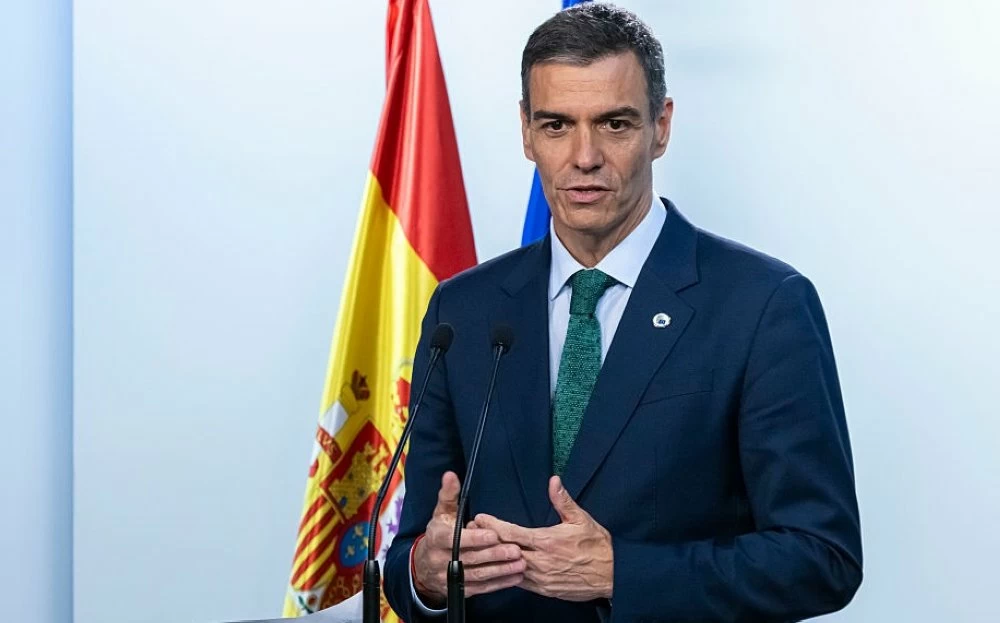
Pedro Sánchez Pérez-Castejón has been a central figure in Spanish politics since becoming Prime Minister of Spain in June 2018. As leader of the Spanish Socialist Workers’ Party (PSOE), he has steered the country through economic, social, and global challenges — from recovery after the COVID-19 pandemic to ambitious social reforms and foreign policy efforts.
Sánchez’s leadership has been marked by a mix of social policy expansion, economic strategy, welfare strengthening, and international engagement. Below is a detailed look at his major contributions and the ways his government has shaped Spain.
1. Strengthening the Welfare State and Social Support
One of Sánchez’s core priorities has been expanding social protections and support for everyday Spaniards.
Expanded Social Benefits and Public Services
Under his government:
-
Birth and care leave was extended to give families more flexibility and support in caring for children. Parental leave was increased beyond prior policies to help families balance work and caregiving.
-
Investments in healthcare and education increased significantly, boosting funding for public health services, specialized medical training, and public investment in schools and universities. Scholarships and vocational training places also expanded.
-
Welfare spending rose sharply, with transfers to regional governments — which manage sectors like health, education, and long-term care — growing by nearly half compared with previous levels.
These moves reflect a broader strategy to make Spain’s safety net more robust after periods of austerity and to reduce inequality.
2. Economic Policies and Growth
Sánchez has focused on economic resilience and sustainable growth, particularly through recovery funds tied to the European Union.
NextGenerationEU and Investment Strategy
Spain was a leader in deploying the EU’s NextGenerationEU recovery funds after the COVID-19 crisis. Large parts of these funds have been directed to:
-
Supporting small and medium-sized businesses
-
Promoting renewable energy and climate initiatives
-
Boosting research and innovation
-
Strengthening digital infrastructure
This has helped Spain rebound economically, reduce public deficits, and encourage exports. Exports have grown significantly, at times surpassing Germany’s, contributing to broader economic confidence.
New Sovereign Investment Fund
In early 2026 Sánchez announced a sovereign investment fund called España Crece (Spain Grows) designed to mobilize billions for long-term strategic sectors — including energy transition, digitalization, housing, and infrastructure — extending the recovery plan’s impact.
3. Housing and Cost-of-Living Measures
Housing affordability and cost-of-living pressures have been major issues in Spain, and Sánchez’s government has taken steps to address them.
Industrial Housing Construction
Spain has moved to accelerate the construction of social and affordable housing, with billions in EU funds dedicated to streamlined industrial construction aimed at significantly increasing housing supply.
Transport Affordability
In late 2025, the government rolled out a nationwide public transport pass offering significantly lower fares, such as €60 per month for unlimited travel — with discounted rates for younger riders — to ease travel costs for millions.
4. Progressive and Social Reforms
Sánchez’s tenure has seen several important reforms in social policy:
Minimum Wage Increases
During one of his early terms, Sánchez’s government raised the minimum wage significantly, aiming to improve living standards for low-income workers.
Legal Reforms on Rights and Equality
Under his watch, Spain advanced laws on LGBT+ rights, banned certain harmful practices like conversion therapy, and introduced a legal framework for euthanasia for terminally ill patients — reflecting progressive legal changes in personal freedoms.
5. Immigration and Integration Policies
Sánchez has taken a distinctive approach to immigration compared with other European leaders.
Regularization of Undocumented Migrants
His government moved to regularize the status of hundreds of thousands of undocumented migrants, granting them residence and work permits — part of a policy reflecting both humanitarian commitments and economic logic in a country with an aging population.
6. Digital Protection and Youth Policy
In early 2026, Sánchez proposed one of Europe’s most comprehensive social media protections for children, planning to ban users under 16 from accessing social platforms unless robust age verification systems are in place — a notable initiative aimed at protecting youth in the digital age.
7. Foreign Policy and Global Stance
Sánchez’s leadership has extended beyond domestic policy into active international engagement:
EU Leadership
During Spain’s presidency of the Council of the European Union in 2023, Sánchez sought to assert Spain as a center-stage EU player, including symbolic visits to Ukraine to underscore solidarity and support for Ukraine’s European path.
Defense Commitments
Under his leadership, Spain committed to meeting NATO’s defense spending target of 2% of GDP earlier than planned, reinforcing the country’s role within European security frameworks.
Humanitarian Stances
Spain took strong, sometimes controversial positions on international conflicts — including arms embargoes and diplomatic stances in Middle Eastern tensions — underscoring a foreign policy grounded in human rights and solidarity.
8. Institutional and Governance Reforms
Sánchez has also emphasized strengthening democratic institutions:
-
Proposed a state anti-corruption plan aligned with international standards to improve public integrity and transparency.
-
Worked on broader cooperation with regional governments to build territorial cohesion.
9. Controversies and Challenges
No leadership is without criticism. Sánchez’s government has faced controversies over:
-
Implementation and early flaws in social legislation, such as issues with consent law reforms he later acknowledged.
-
Internal corruption scandals within his party, prompting anti-corruption initiatives.
-
Political instability due to governing with a fractured coalition and negotiating with regional parties.
Despite these challenges, he has continued to push forward his agenda.
Summary: Pedro Sánchez’s Impact on Spain
Pedro Sánchez’s tenure as Prime Minister has been marked by:
-
Expansion of welfare, health, education, and social support systems
-
Strategic use of EU recovery funds for economic growth
-
Housing and transport affordability measures
-
Progressive social and human rights reforms
-
Innovative digital youth protection proposals
-
Policies on immigration and migrant regularization
-
Active foreign policy and EU leadership
While his time in office has sparked debate, his policies have significantly shaped Spain’s social fabric, economic direction, and international presence during a period of global uncertainty.
How Long Can a Prime Minister Serve in Spain? (Detailed Explanation)
In Spain, the Prime Minister is officially called the President of the Government (Presidente del Gobierno). Unlike some countries that limit the number of terms a leader can serve, Spain does not have a strict term limit for the Prime Minister.
That means:
A Spanish Prime Minister can serve an unlimited number of terms, as long as they keep the confidence of Parliament and win re-election.
However, even without a legal term limit, a Prime Minister’s time in office is shaped by elections, parliamentary votes, and political stability.
1. Is There a Term Limit in Spain?
✅ No — Spain has no formal term limits.
Spain’s Constitution does not say:
-
“A Prime Minister may serve only 2 terms,” or
-
“A Prime Minister may serve only 8 years.”
So theoretically, a Prime Minister could serve:
-
12 years
-
16 years
-
or even longer
As long as they remain in power legally through elections and parliamentary approval.
2. How Long Is One Term in Spain?
A normal term in Spain lasts:
4 years
Spain holds general elections for the lower house of Parliament (Congreso de los Diputados) every four years.
After those elections:
-
The King formally proposes a candidate for Prime Minister.
-
Parliament votes to approve them.
-
If approved, that person becomes Prime Minister.
So:
The Prime Minister’s “term” is tied to the 4-year parliamentary term.
3. Can Elections Happen Before 4 Years?
✅ Yes — and this happens often.
A Prime Minister can serve less than four years if:
-
Parliament is unstable
-
the Prime Minister loses support
-
the Prime Minister calls an early election
-
a coalition collapses
Spain has had several early elections in recent decades due to political gridlock and fragmented parties.
4. What Determines How Long a Prime Minister Stays in Power?
Spain is a parliamentary democracy, meaning the Prime Minister is not directly elected by voters.
Instead, the Prime Minister stays in office as long as they:
A) Maintain majority support in Parliament
They need enough votes to:
-
get elected in the first place
-
pass budgets
-
survive political crises
B) Keep coalition partners on their side
Modern Spain often requires coalitions, meaning the Prime Minister depends on multiple parties working together.
C) Avoid being removed by Parliament
This is done through a vote of no confidence, explained below.
5. How Can a Prime Minister Be Removed in Spain?
Spain has a process called a:
Constructive Vote of No Confidence
This is important because Spain doesn’t allow Parliament to simply say:
“We don’t like the Prime Minister anymore.”
Instead, Parliament must also agree on:
“And here is the new Prime Minister we want instead.”
So a Prime Minister can be removed only if:
-
a majority votes against them
-
AND the same majority agrees on a replacement candidate
This system is designed to prevent chaos and constant government collapse.
6. Can a Prime Minister Quit or Be Replaced by Their Party?
✅ Yes.
A Prime Minister can leave office if:
-
they resign
-
they lose internal party support
-
their party chooses a new leader
-
they step aside after a scandal or election defeat
Even without a no-confidence vote, a Prime Minister can step down voluntarily.
7. Can Someone Serve Multiple Non-Consecutive Terms?
✅ Yes.
Because there is no term limit, a politician could serve:
-
one term
-
lose power
-
then return later for another term
This is possible as long as they win parliamentary support again.
8. What Is the Longest Someone Has Served as Prime Minister in Spain?
Spain’s modern democratic system began after the Franco era, and since then some Prime Ministers have served for long stretches, especially those with stable majorities.
But legally, there is no maximum limit, so future leaders could serve longer than any previous one.
9. Why Doesn’t Spain Have Term Limits?
Spain follows the model used in many European parliamentary democracies, like:
-
Germany
-
the United Kingdom
-
the Netherlands
-
Sweden
These countries typically do not limit terms for prime ministers because:
-
The leader depends on Parliament’s support
-
Elections can remove them
-
Coalition politics naturally limits long-term dominance
-
Parties can replace leaders internally
So the idea is:
Parliament and elections are the “term limits.”
Final Summary
How long can a prime minister serve in Spain?
-
Spain has no term limits for Prime Ministers.
-
A parliamentary term lasts 4 years, but early elections can shorten it.
-
A Prime Minister can remain in office indefinitely if they:
-
win elections
-
maintain parliamentary support
-
survive votes of confidence
-
keep coalitions stable
-

Abdeslam is the Founder and Editor-in-Chief of Prevnews.top, where he oversees global news coverage and editorial integrity. With over 13 years of experience in digital journalism and a background in Blogging, i specializes in translating complex global events into actionable insights. Abdeslam is committed to 100% human-verified reporting. Connect with him on [LinkedIn] or follow his latest updates on [Twitter/X].